
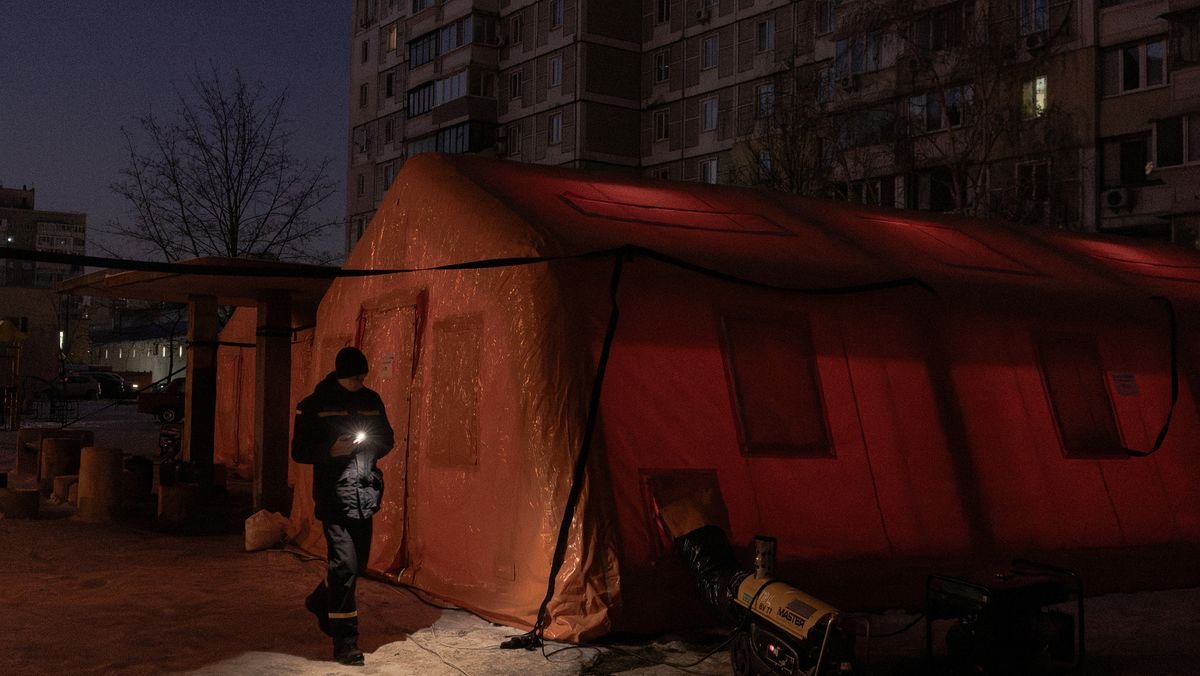

Hundreds of Ukrainians in Kyiv have received urgent warnings to evacuate due to severe Russian assaults causing disruptions to half of the city’s residences and escalating toward a potential humanitarian crisis. The ongoing conflict has intensified, with Ukraine vowing to eliminate “50,000 Russians monthly” to push back Moscow’s forces. Over 600,000 residents have already fled Kyiv as Mayor Vitali Klitschko emphasizes the city’s descent into a critical state.
Mayor Klitschko has urged citizens to leave if possible, as Russian attacks aim to subdue Ukrainians facing harsh weather conditions. Approximately half of Kyiv’s population of three million is now without power, leading to a dire situation with essential services like heating, water, and electricity severely affected. The city had to take measures, including draining the central heating and water system, to prevent infrastructure damage from freezing temperatures.
Local residents, struggling with the lack of basic amenities, describe the ability to flush toilets once the water supply is restored as a luxury amidst the looming disaster caused by Russian aggression targeting civilians. Ukraine’s new defense minister, Mykhailo Fedorov, stresses the necessity of eliminating 50,000 Russian troops monthly to shift the tide of the ongoing conflict.
Meanwhile, Russia is gearing up to deploy an additional 400,000 troops and establish 11 new divisions in efforts to gain ground in the war. The conflict, which began in 2014 following Russia’s invasion of Crimea post the Maidan Revolution, has escalated into the most significant warfare in Europe since World War II, resulting in a massive refugee crisis.
The aftermath of the Maidan protests led to political upheaval in Ukraine, triggering pro-Russian demonstrations in the eastern regions infiltrated by Russian intelligence operatives and militants. The annexation of Crimea and subsequent territorial disputes in Ukraine’s eastern Donbas region further exacerbated tensions between the two nations.
The shifting stance of US President Donald Trump towards Ukraine and Russia, at times supporting Ukraine while also displaying admiration for President Putin, has created diplomatic uncertainties. Trump’s controversial statements and actions, including his approach towards NATO allies, have raised concerns about the alliance’s unity. President Zelensky’s encounters with the White House and the looming Greenland threats have added complexities to the geopolitical landscape, potentially straining NATO’s cohesion.