
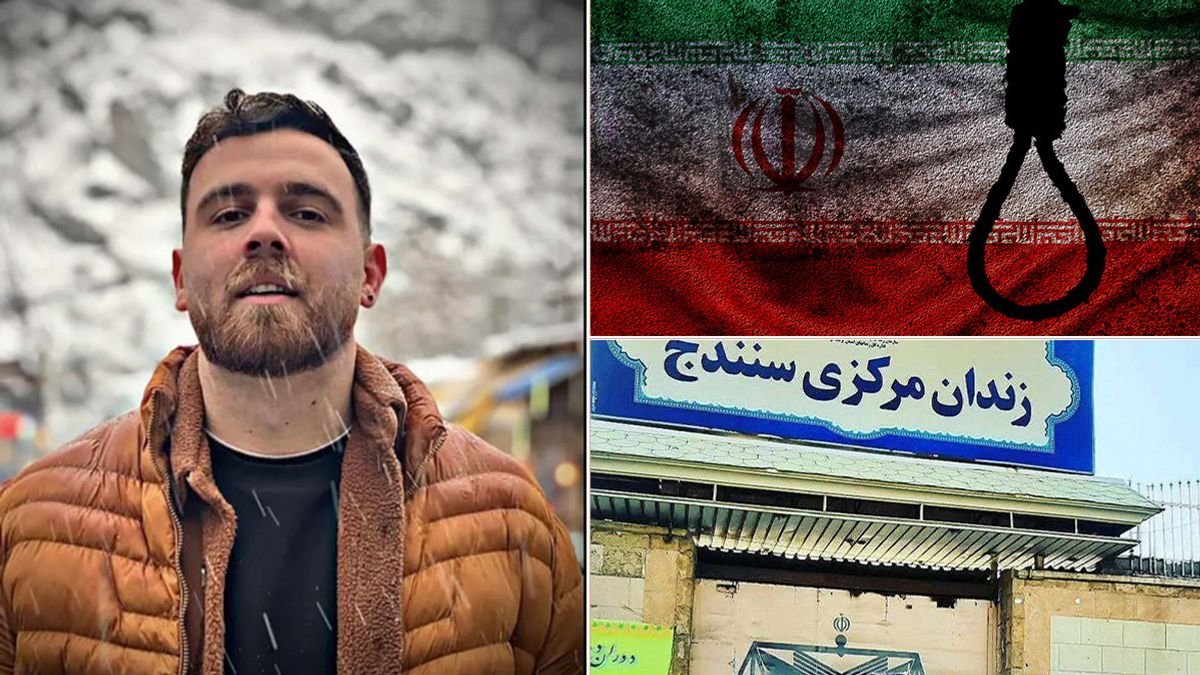

An Iranian protester finds himself in a distressing state of uncertainty as his scheduled execution is delayed suddenly. Shop owner Erfan Sultani was facing hanging on January 14, but following an intervention by US President Trump, the execution has been postponed temporarily by the Iranian authorities. Despite this, the regime has warned of severe consequences for “rioters” amid widespread anti-government protests in the country.
Internet shutdowns in Iran have contributed to quelling the protests, but human rights organizations and Sultani’s relatives confirm that his death sentence has been temporarily halted. The 26-year-old from Fardis near Tehran was arrested on January 8 and charged with moharebeh, a capital offense in Iran often used against those seen as challenging the government.
Sultani’s trial, reportedly lasting only an hour, has gained global attention for the lack of legal representation and transparency. His family was granted a mere 10 minutes to bid farewell before being warned of the finality of the sentence.
In a disturbing trend, thousands of protesters have reportedly been killed in the violent suppression of demonstrations. Iran, alongside China, holds the highest number of annual executions, with 1,922 death sentences carried out last year. Human rights advocates have noted a significant increase in executions since the 2022 Woman Life Freedom uprising.
Amnesty International has criticized the unfair trials in Iran’s Revolutionary Court, where dissenters are often charged with vague offenses like “corruption on earth.” The use of fear and uncertainty in the Iranian judicial system is designed to exert maximum psychological pressure on detainees and their families, creating a pervasive atmosphere of terror.
Apart from hanging, Iran employs other brutal execution methods like stoning, firing squad, beheading, and throwing individuals from heights. While Evin Prison is not a primary site for executions, it is notorious for torture and harsh conditions, as highlighted by former detainees like Anoosheh Ashoori who described the unbearable living conditions inside the facility.
The psychological torment inflicted on individuals facing death sentences serves as a tool of political terror to assert control and instill fear among the populace. This deliberate strategy aims to break the spirits of detainees and their families, emphasizing the state’s dominance and the potential consequences for dissenters.