

Britons are being cautioned about two rare and hazardous weather occurrences anticipated later this month due to an Arctic blast that could bring temperatures as low as -10C.
Following a chilly start to 2026, many regions experienced a slightly milder week, but forecasts suggest that individuals should remain prepared with hats and gloves for more wintry conditions throughout January.
Weather maps show low-pressure systems moving in from the north and west, introducing unsettled conditions and snow where moist air collides with cold air descending from the Arctic.
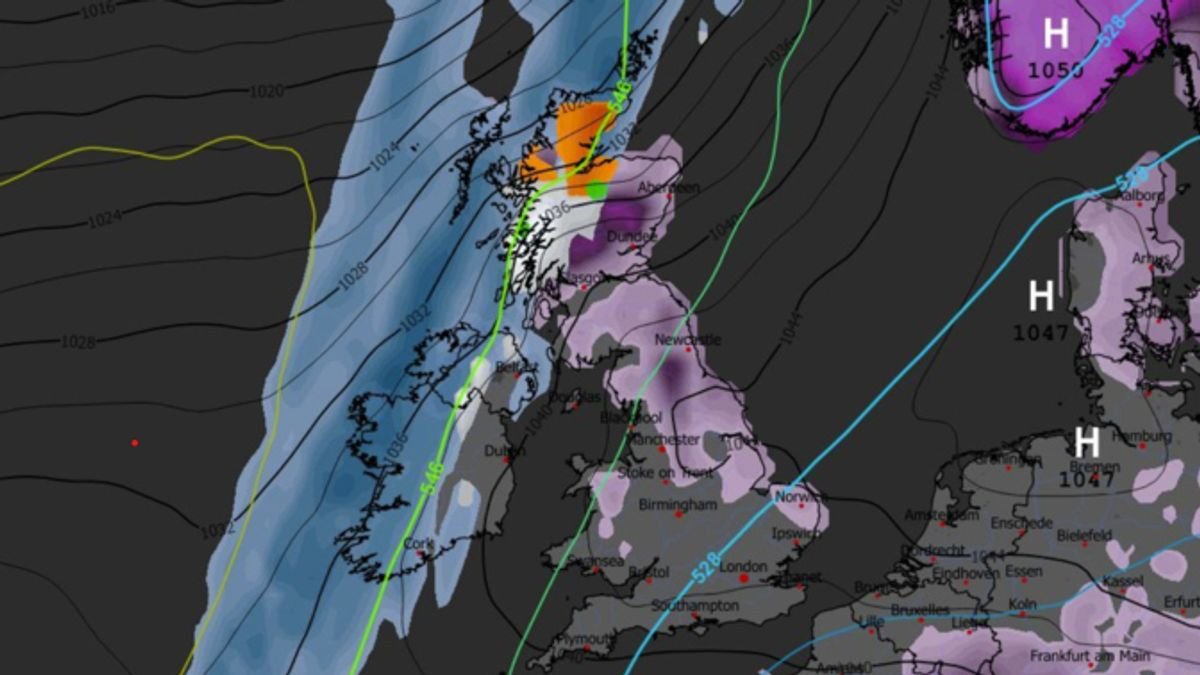
The final week of January is expected to see heavy snowfall, with a low-pressure system affecting northern weather, alongside two high-pressure systems to the east and west.
Temperatures across the country are significantly below zero, with WXCharts indicating a drop to -10C in Scotland. By January 28, there will be a contrast, with very low temperatures in the north and potentially rising to single digits in the south.
In Scotland, weather maps depict unusual orange and green colors, signaling freezing rain and ice pellets, which pose significant risks.
On January 28, freezing rain is forecasted for northern Scotland, shifting east and west throughout the day, with a patch expected in Yorkshire the following night.
Freezing rain forms when snow transitions to rain in warm air, then refreezes upon encountering colder air, creating a hazardous icy layer on surfaces, as explained by the Met Office.
The Met Office emphasizes the dangers of freezing rain, noting its adverse effects on aircraft, trees, power lines, and road safety due to the rapid formation of ice.
According to America’s National Weather Service, freezing rain poses a particular risk to bridges and elevated roadways, which freeze quickly and can lead to structural damage and power outages.
Weather maps for January 28 show a green area in northern Scotland, indicating ice pellets, which shift to central Scotland before dissipating by nightfall.
Ice pellets form when partially melted snowflakes refreeze in sub-freezing air, creating small, bouncing particles that can accumulate on the ground, resembling a dense snow cover.
The Met Office’s long-range weather forecast from January 20 to 29 suggests an increased likelihood of cold conditions and snow towards the end of the month.
The forecast highlights a battle between Atlantic weather systems from the west and high-pressure systems bringing colder temperatures from the east, with milder conditions initially prevailing.
Later in the period, a shift to colder weather is anticipated, increasing the potential for snow across various regions of the country.