
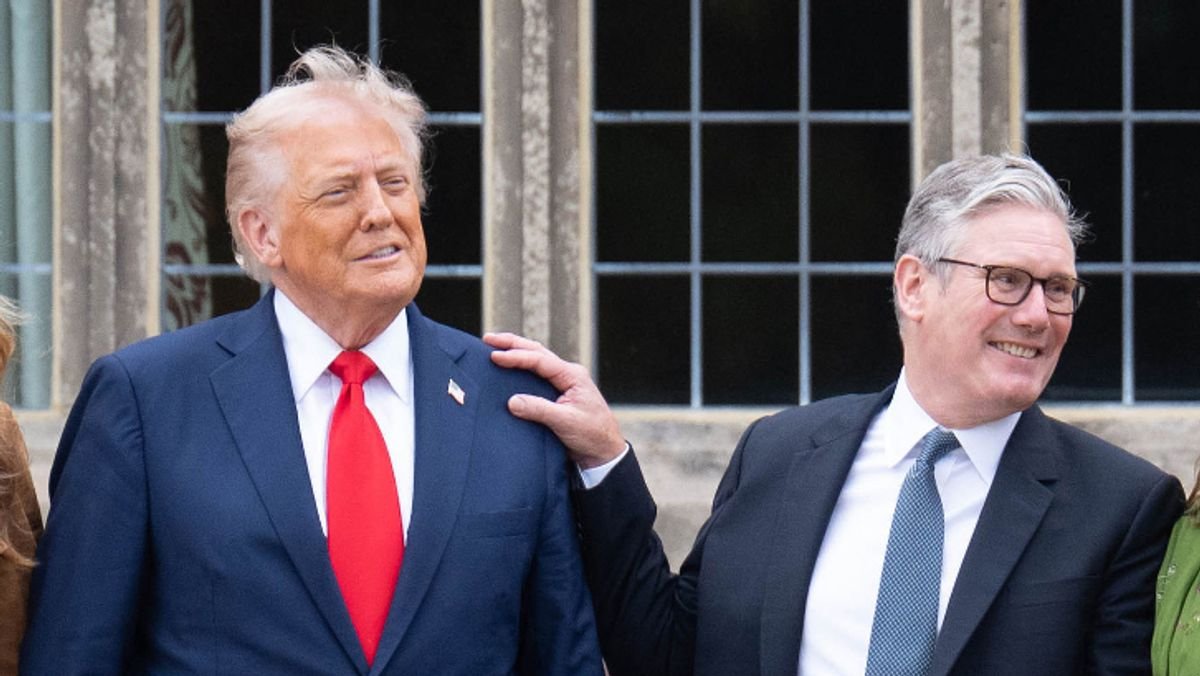

In an unexpected turn in his second term, President Donald Trump’s affinity for British Prime Minister Keir Starmer has drawn attention. Starmer has described their rapport as genuine, bonded by shared ‘family values,’ positioning him as a trusted intermediary for European leaders like Nato’s Mark Rutte and Danish Prime Minister Mette Frederiksen.
Notably, Starmer recently played a pivotal role in diffusing tensions over Greenland, relaying messages from Rutte and Frederiksen to Trump. His influence on Trump’s decision-making, notably regarding Ukraine, has been acknowledged by Ukrainian President Volodymyr Zelensky.
However, like any relationship, challenges have emerged. Despite initial successes, such as securing a second state visit for King Charles, disagreements arose over trade deals and tariffs. The dynamics of their interactions have been marked by fleeting moments of cooperation, followed by abrupt shifts in policies and priorities.
While Starmer’s impact on Trump’s stance toward Russia and Ukraine remains uncertain, Trump’s unpredictable behavior has led to diplomatic strains and unilateral actions, like the invasion of Venezuela without prior consultation with Starmer.
The issue of Greenland has further strained their rapport, with Trump’s aggressive stance conflicting with Starmer’s diplomatic efforts to respect Greenland and Denmark’s sovereignty. Trump’s unpredictable actions have raised concerns about the depth and effectiveness of the U.S.-U.K. relationship under his administration.
As uncertainties loom over future engagements and potential conflicts, the true nature of the relationship between Starmer and Trump remains a subject of scrutiny and evaluation.