
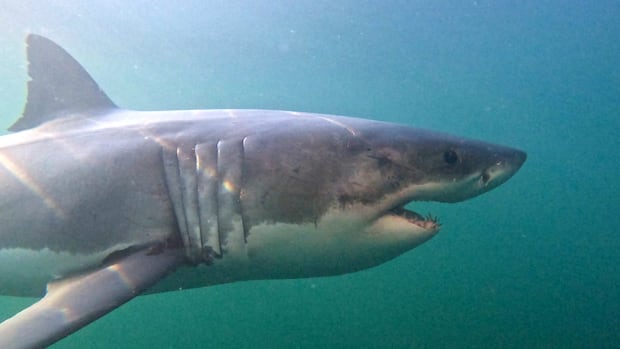

Many nations where sharks are common have started utilizing drones to monitor their presence near public beaches, yet officials in Nova Scotia indicate that they have no immediate plans to implement this technology.
Paul D’Eon, who has served as the director of the Nova Scotia Lifeguard Service for many years, acknowledges that lifeguards in countries like Australia and the United States have adopted drones, but his organization is not currently considering their use.
“We always evaluate safety methods, but have we taken steps towards it? Not at this current time.”
The Department of Natural Resources, which manages the province’s public beaches, did not specify whether it is contemplating funding for aerial shark monitoring. Lynette Macleod, a spokesperson for the department, confirmed to CBC News that drones are not in use at present.
The lifeguard service oversees 24 public beaches across the province, operating eight hours daily throughout the summer season. During these months, great white sharks migrate annually into the warmer waters of Nova Scotia.
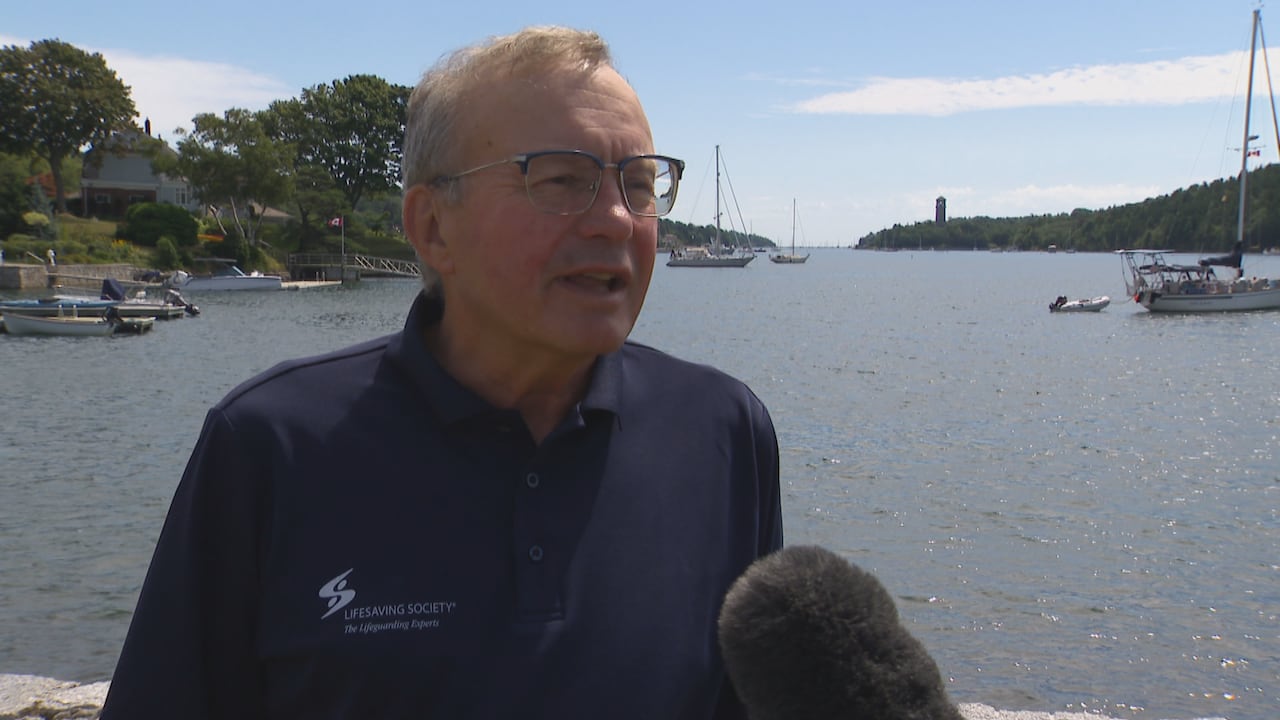
Paul D’Eon, who has safeguarded Nova Scotia’s beaches for 52 years. (David Laughlin/CBC)
D’Eon stated that drones are unnecessary, as he has never witnessed a shark attack in his 52 years of safeguarding Nova Scotian beaches. However, he notes a slight increase in sightings of sharks.
In the past, sightings that resulted in beach closures due to shark fins were infrequent, occurring only every few years. Nowadays, such closures happen approximately twice a year.
D’Eon mentioned that the lifeguard service monitors various elements that impact public safety, but he does not currently recommend the province invest in drones.
“If we determine that circumstances change significantly, we would certainly revisit this issue.”
-
Large great white shark found dead on Nova Scotia beach, cause of death a mystery
-
On Big Tancook Island, researchers are starting to fill in the gaps on white sharks
Since 2015, New South Wales in Australia has employed drones for beach monitoring. Following a series of shark attacks, the state government increased funding for drone patrols by $34 million in June 2026.
According to data acquired by Agence France-Presse, lifeguards utilizing the drones detected sharks 73 times within the first two days of the expanded initiative.
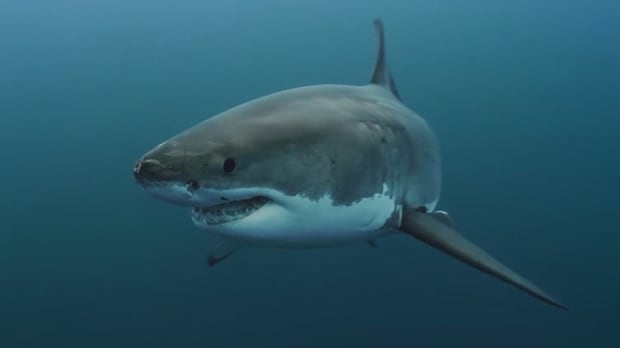
Chris Fischer with OCEARCH indicates that the white sharks began arriving in June and July. He notes that southern waters are becoming too warm for the sharks, prompting them to migrate north.
Currently, drones oversee 70 beaches in New South Wales year-round, and officials plan to incorporate artificial intelligence into their shark detection efforts.
In New York State, both the state and the New York City Police Department have deployed a fleet of shark detection drones, with the state investing an additional $322,000 US in this technology earlier this summer.
Sharks at Nova Scotia beaches
D’Eon mentioned that a shark sighting at Martinique Beach this year led to the current procedure — a two-hour closure of the beach.
Visitors at Martinique Beach expressed to CBC on Monday that the presence of drones operated by lifeguards patrolling above the water would enhance their sense of safety.
“Even if they think it’s unnecessary, it only takes one incident for that entire viewpoint to shift,” remarked Declan Byers, who was enjoying the sandy beach. “Invest in it now to ensure people feel safe rather than waiting for something to happen and regretting the lack of investment.”
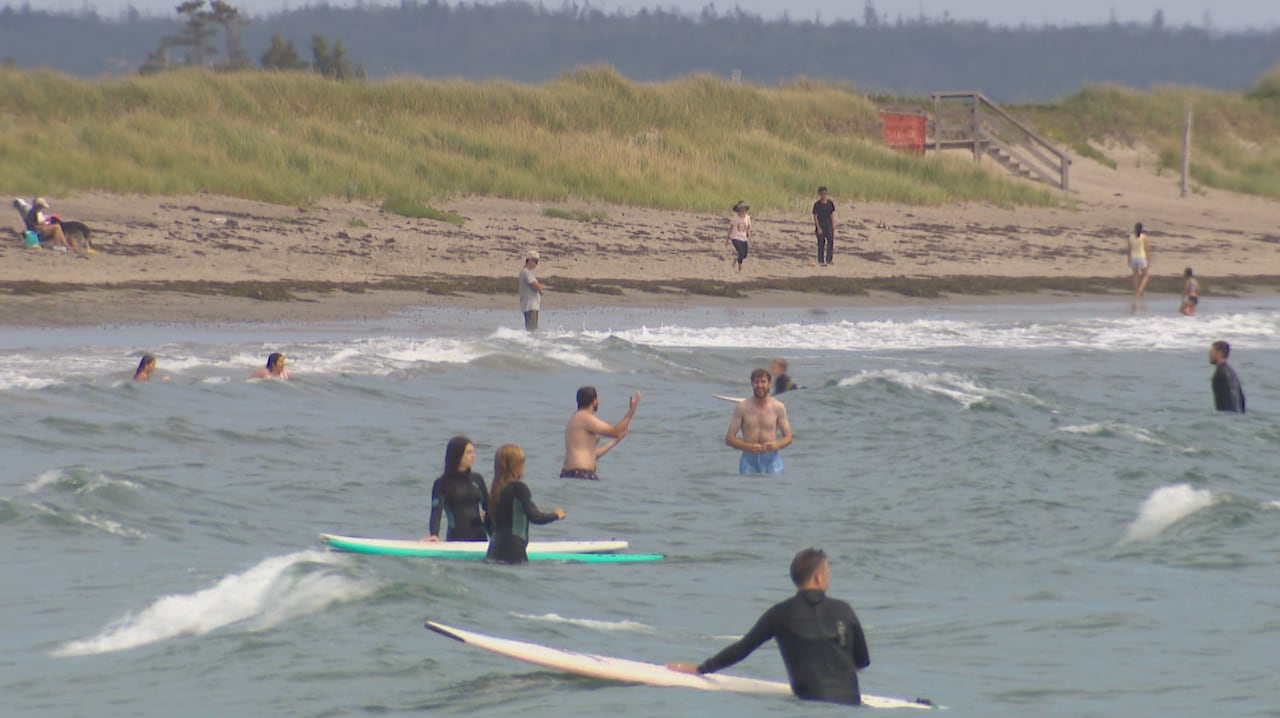
Beachgoers enjoy the water at Martinique Beach near Halifax on Monday, Aug. 17, 2026. (David Laughlin/CBC)
Philip Skinder, head coach and director of the Vancouver-based Pacific Lifesaving Club, was training with his team at Martinique in preparation for the Canadian Surf Lifesaving Championships this weekend.
“I believe it’s an excellent allocation of resources; it’s efficient and effective,” he stated. “Any measures taken to protect lives in the ocean and enhance enjoyment with greater peace of mind are certainly worth the investment.”
Recent sightings of sharks have made Amber Beaver apprehensive about swimming this year. The day before her conversation with CBC at Martinique, her father noticed a shark while fishing offshore.
“I think there are likely better ways for the province to allocate funds, yet having drones would definitely make me feel somewhat more secure,” she commented.
D’Eon advises beachgoers to enhance safety by avoiding swimming during dawn and dusk, or near seals and active fishing zones.
MORE TOP STORIES
-
‘I was meant to be there’: Off-duty Mountie helps rescue baby, family trapped in house fire
-
Video
New Halifax fire chief says job is ‘opportunity of a lifetime’
-
Convicted killer seeks return of cash and bitcoin
-
Man accused of threat against U.S. Consulate in Halifax facing terrorism charge, Crown says
-
CBRM enters negotiations again with SHIP to bring offshore wind power to Cape Breton