
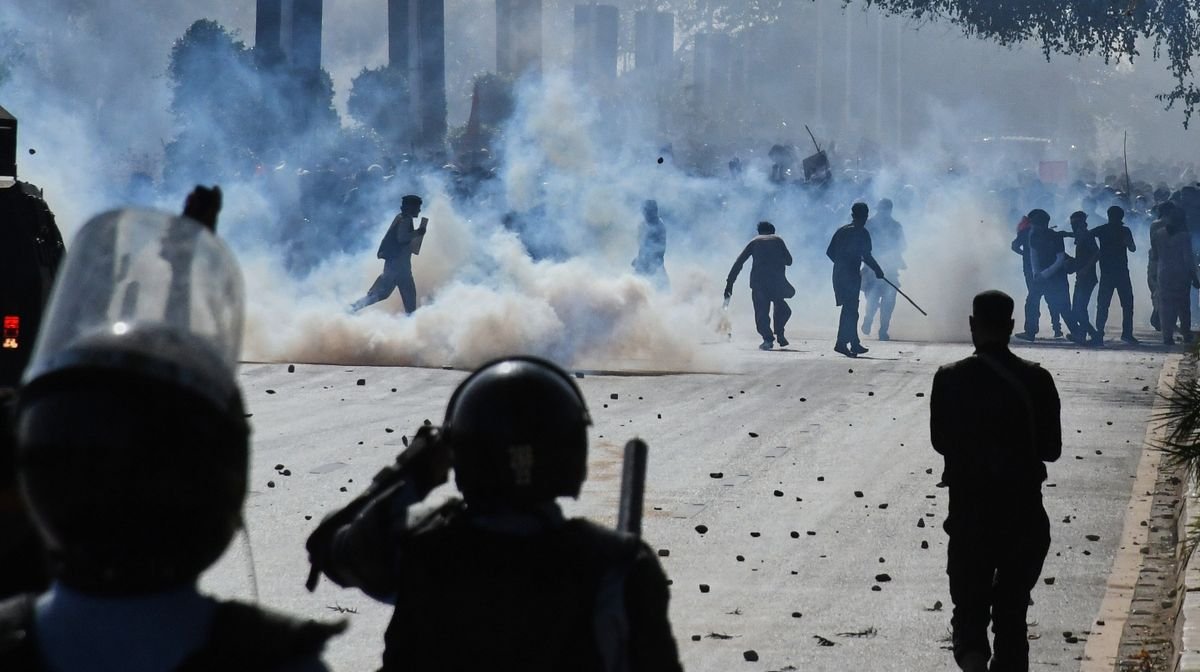

The conflict between the United States and Iran has resulted in the removal of Iran’s oppressive leadership. However, the aftermath may see even more dangerous entities emerging. The UK’s defense secretary, John Healey, acknowledges that the death of Khamenei, the leader of the oppressive regime, may not be mourned due to his tyrannical rule focused on anti-Israel and anti-American sentiments.
The destruction caused by American and Israeli airstrikes could pave the way for a less friendly and democratic regime to take control. The Islamic Revolutionary Guard Corps is already retaliating by spreading chaos and violence across the Middle East, indicating a shift towards more extremist ideologies.
Potential scenarios include a military junta comprising former spies and IRGC generals taking over, fueled by a desire to expand Iranian influence through terrorism. Despite warnings from Trump, the region faces the risk of increased violence and instability as various factions vie for power.
The US’s unilateral actions have raised concerns about the legality and consequences of the strikes. Trump’s approach lacks a clear post-conflict strategy, leaving Iran vulnerable to further turmoil. The lack of ground troops suggests a reliance on air strikes, raising doubts about the effectiveness of such a military campaign.
While a full-scale war seems unlikely, the region is bracing for destabilization following the recent escalations. Experts suggest that a revolution could be sparked by the events, leading to either positive or negative outcomes depending on how the situation unfolds in Iran.
The killing of Khamenei has polarized opinions on the best and worst-case scenarios for the region. The possibility of regime change through popular uprising contrasts with the risk of continued aggression from the Revolutionary Guard, posing challenges for regional stability and international relations.