
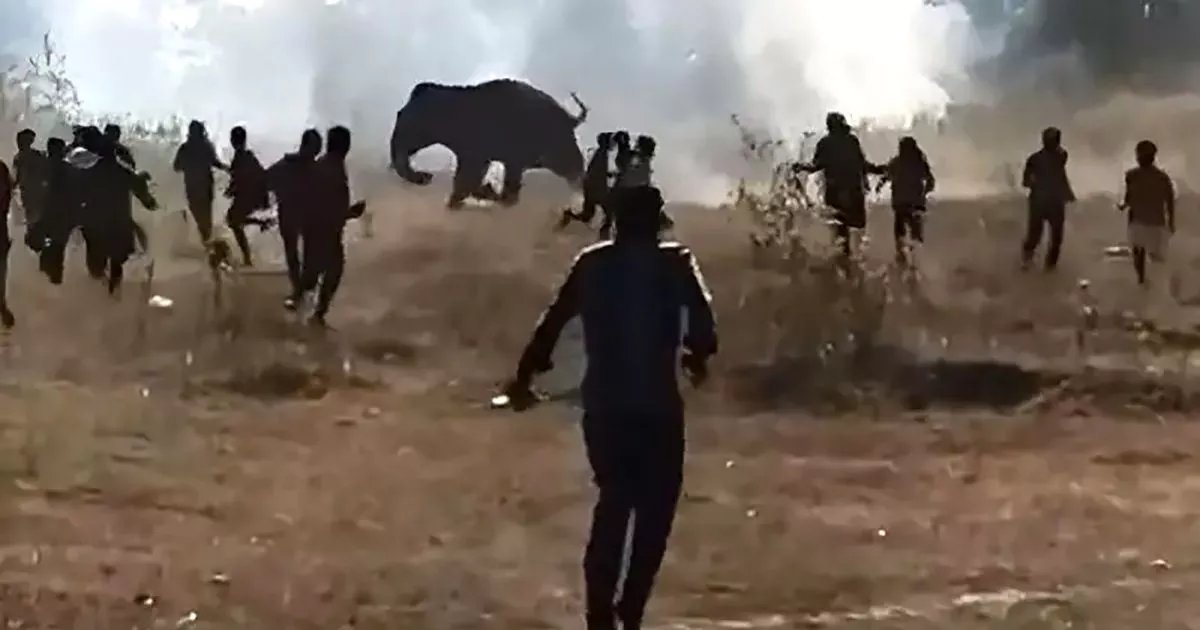

Villagers residing in India are living in fear and opting to sleep on rooftops due to a dangerous wild elephant that has claimed the lives of 22 individuals and is still at large.
In the West Singhbhum district of Jharkhand, residents are compelled to evacuate their homes and seek refuge on elevated structures for safety precautions as a single-tusked, juvenile male elephant continues its destructive spree, smashing barriers and causing havoc.
This elephant, believed to be in its mating phase known as musth, is displaying heightened aggression, a common behavior during this period lasting up to 20 days, resulting in tragic consequences as it has already taken over 20 lives, including young children and an infant.
Indian authorities have mobilized a team of 80 forest officers to track down the elephant and administer tranquilizers to subdue it. While most villagers are avoiding encounters with the elephant out of fear, a few locals have joined efforts to capture the creature before further casualties occur.
Aditya Narayan, a division forest officer in the Chaibasa district, noted the unusual intensity of the elephant’s attacks during its mating phase, stating that such behavior is atypical. He mentioned instances where individuals were trampled upon, leading to multiple fatalities within a single family, describing the situation as unprecedented.
The International Fund for Animal Welfare highlights that elephants usually do not attack humans unprovoked but may act defensively when feeling threatened. The rise in “human-elephant conflict” is attributed to the escalating competition for resources and space as elephants and humans increasingly share habitats.
As climate change impacts ecosystems, elephants are forced into new territories, intensifying conflicts as humans encroach on elephant habitats for essential resources like water and firewood. This competition poses threats to both human lives and wildlife survival.