
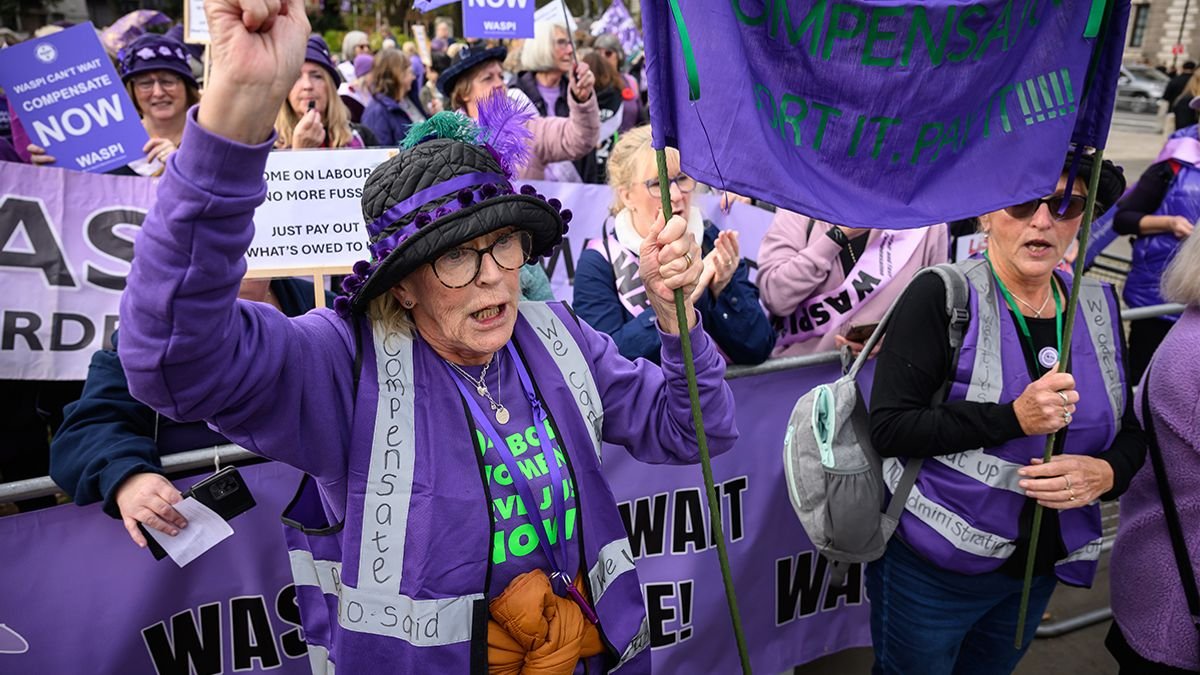

The leader of the WASPI movement has cautioned government officials that backing for their cause is at an all-time high, with members prepared for a potential legal battle in the upcoming year.
Angela Madden, the chair of Women Against State Pension Inequality (WASPI), emphasized that millions of women born in the 1950s remain steadfast in their pursuit of compensation. This resolve comes as the government reevaluates its decision to deny payments following the emergence of new evidence.
Aged 71, Angela asserted that nothing less than a compensation plan for over 3.5 million women would be acceptable. In an interview with The Mirror, she stated, “If we believe the decision is unjust, we are prepared to pursue legal action once more.”
Initially set for a legal confrontation in December to demand a judicial review, WASPI’s legal action is currently on hold pending the government’s latest review outcome. Angela expressed members’ continued outrage over the failure to grant payments ranging from £1,000 to £2,950 over a year ago, estimating that an affected woman passes away every 13 minutes.
Following a last-minute agreement to cover £180,000 in legal costs, the Department for Work and Pensions (DWP) is expected to announce its decision in February.
Angela remarked, “The government avoided court as they knew their decision would likely be deemed unlawful. We are increasingly skeptical that any changes will be made.”
Failures within the DWP led to a lack of proper communication regarding the decision to raise the state pension age for women, resulting in severe financial hardships for many.
Despite setbacks, Angela noted a growing support base for the campaign, with an influx of followers on social media and increased membership. Fundraising efforts have also exceeded expectations, indicating sustained backing from the public.
In 2024, the government apologized for a significant delay in notifying affected women of the pension age change but stood firm against providing financial compensation, despite recommendations from the Parliamentary and Health Service Ombudsman.
Keir Starmer opposed a costly compensation scheme, citing concerns about taxpayer funds. However, Angela emphasized the importance of acknowledging the real impact on women affected by the pension age change, urging the government to reconsider its stance.
Recent revelations regarding undisclosed documents from 2007 have prompted a review of the decision not to award compensation. Nevertheless, the government has clarified that reassessing the decision does not guarantee financial redress.
The DWP has indicated that a decision will be reached by February 24. Public sentiment overwhelmingly supports fair compensation for the affected women, with many feeling let down by political figures who pledged to support their cause.