
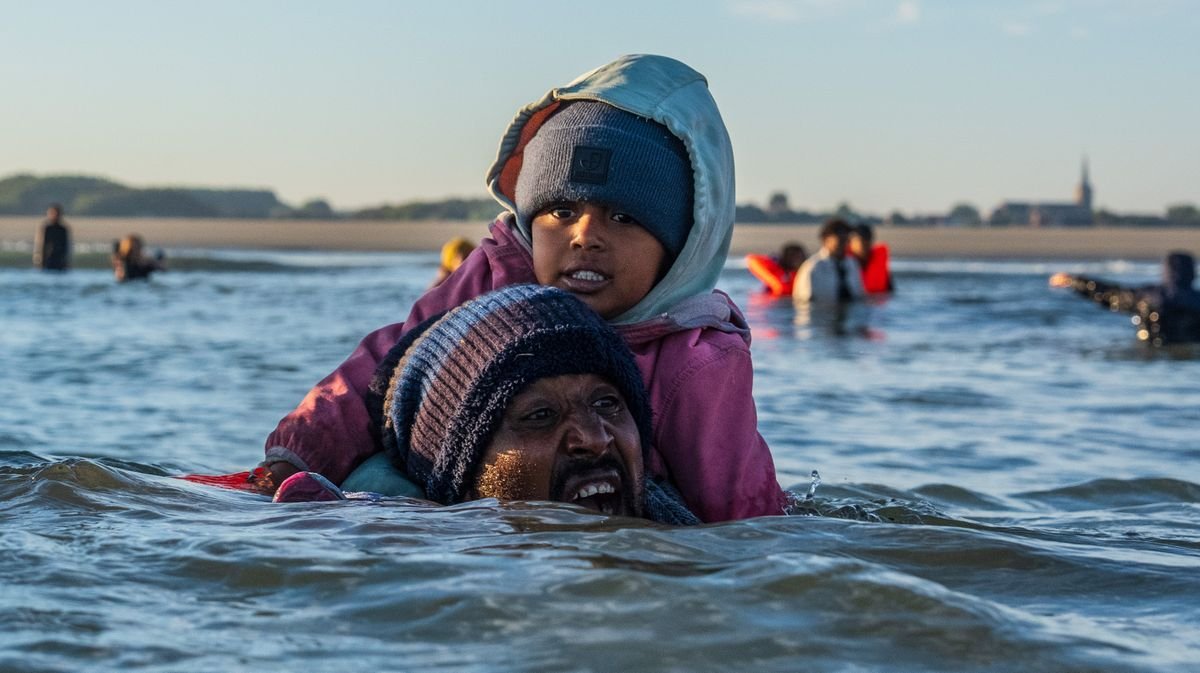

More than 41,000 individuals successfully arrived in the UK via small boats in 2025, as confirmed by the Home Office. The data revealed that a total of 41,472 people undertook this risky voyage, marking a 13% increase from the previous year’s figure of 36,816. However, this number was below the peak of 45,774 recorded in 2022, showcasing a significant rise in small boat crossings since the mere 299 arrivals documented in 2018.
Recent reports from The Mirror highlighted that in 2025, at least 36 individuals lost their lives while attempting to reach the UK from France, a decrease from the 78 fatalities reported in 2024. Tragically, among the deceased were a mother, Kazaq Ezra, aged 40, and her daughter, Agdad Hilmi, aged eight, who were tragically crushed on a small boat in May.
The data indicated that the highest number of arrivals occurred on May 31, with 1,195 individuals successfully reaching the UK. In response to the escalating crossings, the Government has introduced various measures aimed at reducing these incidents, including significant changes to asylum policies and a bilateral agreement with France for the return of migrants on a one-for-one basis.
Enver Solomon, the chief executive of the Refugee Council, emphasized that most individuals embarking on these perilous journeys have fled oppressive regimes like the Taliban in Afghanistan and brutal civil conflicts in countries such as Sudan. He highlighted that these individuals risk their lives in small boats out of desperation to seek safety in a country where they have familial or communal ties. While acknowledging the government’s efforts to curtail channel crossings, he criticized plans that may penalize refugees, deeming them unjust and ineffective deterrents.
The Home Office revealed that there were no recorded small boat crossings on New Year’s Eve, continuing a streak of no crossings during the festive season. Throughout 2025, the number of arrivals remained notably high, reaching levels unseen since the commencement of data on Channel crossings in 2018. However, the influx slowed down in the final two months of the year, with extended periods of no arrivals, including a 28-day stretch from November 15 to December 12. The average number of individuals per boat increased to 62, up from 53 in 2024 and 49 in 2023.
A Home Office spokesperson expressed dismay at the escalating number of small boat crossings, asserting that the British public deserves better and highlighting the government’s proactive stance in addressing the issue. Efforts to combat smuggling routes have been ongoing, with Border Security Commander Martin Hewitt acknowledging the challenges involved in disrupting these operations but underscoring the persistent commitment to this cause.
Legislation to enhance border security and combat people-smuggling rings was strengthened with the enactment of the Border Security, Asylum, and Immigration Act in December. This legislation introduces new criminal offenses and empowers law enforcement agencies to utilize counter-terrorism measures against such criminal networks. Additionally, Home Secretary Shabana Mahmood unveiled a series of reforms in what she described as the most significant overhaul of the UK’s asylum system in modern history, emphasizing the deterrence of migrants and facilitating deportations.
Under the new measures, individuals granted asylum will face a 20-year waiting period to apply for permanent settlement, with their status subject to review every two-and-a-half years. These changes could lead to the deportation of tens of thousands of individuals in the event of regime changes in their home countries. Furthermore, the UK secured a return agreement with France in the summer, marking the first such agreement with a European partner post-Brexit.
Border security minister Alex Norris reported that under the returns agreement, 193 migrants had been repatriated to France, while 195 had arrived in the UK as of December 16. The ongoing collaboration aims to stem the flow of illegal crossings and reinforce border controls to safeguard both countries’ interests.