
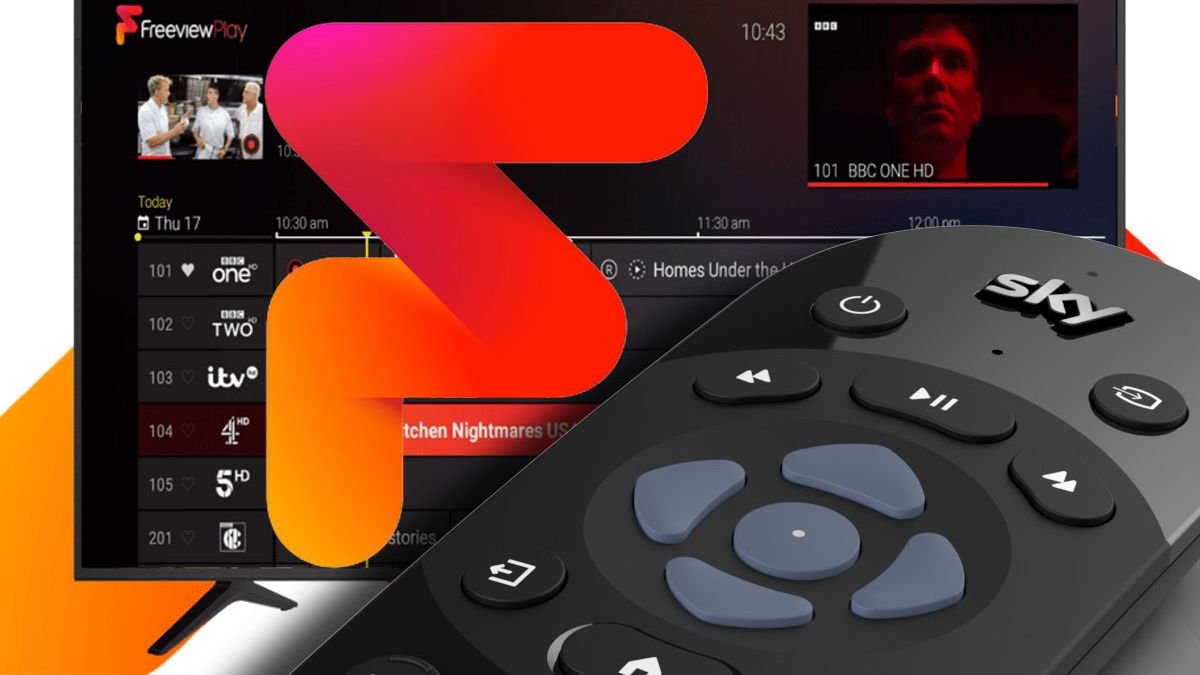

A recent report sponsored by Sky indicates that a significant number of UK households are shifting towards using internet-based TV services for live and on-demand content. The report suggests that by the mid-2030s, most households in the UK could have access to internet-delivered television, potentially leading to the retirement of traditional terrestrial distribution methods like Freeview.
Numerous alternatives to traditional aerial-based TV viewing exist, such as Sky’s latest streaming offerings and the Freely service, developed by the same team behind Freeview. Freely, integrated into many new TVs, enables viewers to access live and on-demand programming through a broadband connection.
With the increasing prevalence of internet-connected devices in homes, a growing number of people are transitioning from conventional broadcast TV to streaming services.
One challenge facing Freeview is the potential need to share radio frequencies with mobile operators after 2031, which could further undermine the current over-the-air transmission system.
The expenses associated with maintaining the aging terrestrial TV infrastructure are rising, prompting discussions within the UK government about future strategies.
Nick Herm, Sky’s Group Chief Operating Officer, highlighted the potential for internet-delivered TV to promote social inclusion. He emphasized the feasibility of transitioning entirely to internet-based TV by the 2030s, which could bridge the digital divide and yield cost savings by phasing out legacy systems.
Despite the growing popularity of streaming services, some individuals are apprehensive about the shift. A petition opposing the discontinuation of Freeview has garnered 100,000 signatures, with concerns raised about the requirement for a reliable and costly internet connection for streaming compared to the simplicity of using an aerial for Freeview.
Lynette, an 80-year-old resident of Kent, expressed her reliance on Freeview for entertainment, news, and educational content, voicing concerns about the potential complexities associated with streaming services and the need for multiple accounts.
The future landscape of TV broadcasting is expected to evolve further, with updates anticipated in the near future.