
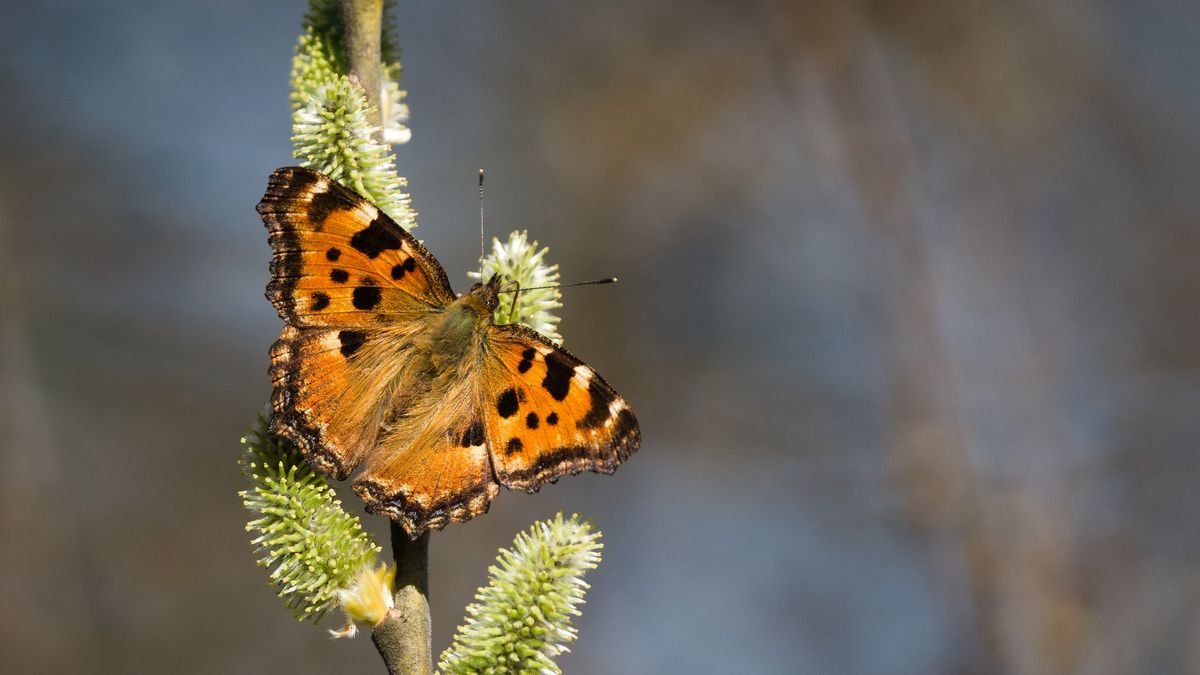

A rare butterfly species believed to be extinct for three decades has been recently sighted in various locations across England. The Large Tortoiseshell, which had only sporadic sightings in the past 30 years, is now being reconsidered for removal from the extinction list, according to experts.
Nature enthusiasts have captured images of the butterfly in Kent, Hampshire, Sussex, Dorset, Cornwall, and the Isle of Wight in recent weeks. While occasional sightings have occurred since its extinction status, the frequency of encounters is on the rise.
The Head of Science at Butterfly Conservation stated that if the organization were to update its endangered species list, the Large Tortoiseshell would likely be reclassified as not extinct. Describing the butterfly as beautiful and charismatic, Professor Richard Fox emphasized the importance of supporting its survival and potential revival.
Known for its vibrant orange, black, and blue wings, the Large Tortoiseshell, scientifically named Nymphalis polychloros, was once prevalent in England and Wales but was last officially recorded in the UK as a breeding species in the 1980s.
The decline in population was linked to Dutch elm disease affecting elm trees, the primary egg-laying sites for the butterfly. Although individual sightings have been reported over the years, a stable breeding population necessary for classification as a resident species was absent.
Recent observations indicate a growth in the butterfly population in the Netherlands, suggesting a possible migration to England. The Large Tortoiseshell emerges from hibernation in early spring, explaining the surge in sightings during this period when few other butterflies are active.
Butterfly Conservation has added the Large Tortoiseshell to its First Sightings web page, documenting the initial sightings of UK species. The first reported sighting this year occurred on the Isle of Wight on February 24, with additional sightings in Kent, Hampshire, and Sussex.
Although currently listed as “regionally extinct” in Great Britain, the species may soon be reevaluated due to recent sightings in southern England. The upcoming Red List assessment is expected to reflect these changes, potentially marking a shift in the classification of the Large Tortoiseshell.
Professor Fox highlighted the ongoing monitoring and uncertainty surrounding the butterfly’s reestablishment, emphasizing the need for continued observation and conservation efforts during this critical phase.