
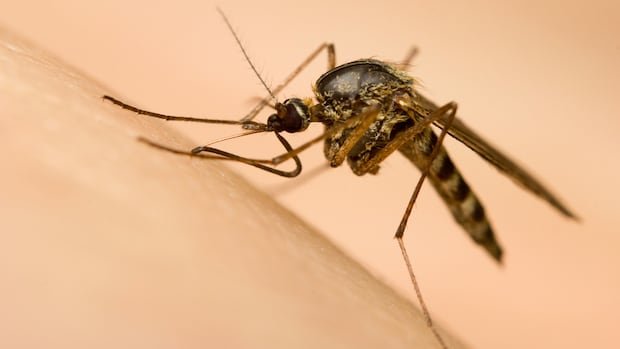

This summer, many prairie cities faced a surge in mosquito populations, leading to a shortage of bug spray in stores across Manitoba, Saskatchewan, and Alberta due to high demand. Data from the City of Edmonton revealed a 15-fold increase in mosquitoes in July compared to the previous year. Although not record-breaking, this spike contrasted sharply with the past two summers, influencing public perception, according to Peter Daly from the City of Edmonton.
Similarly, Saskatoon and Winnipeg observed elevated mosquito numbers in July compared to the previous year. In southern Ontario, experts attributed the prolonged presence of mosquitoes to the record rainfall experienced this summer. Fiona Hunter, a professor at Brock University, noted a rise in the Ochlerotatus trivittatus mosquito species in southern Ontario due to the abundant rain creating favorable breeding grounds.
The Ochlerotatus trivittatus mosquito is known for persistent biting behavior, potentially leading to increased human-mosquito interactions this year. Experts like Rosalind Murray from the University of Toronto suggested that the heavy rainfall triggered the hatching of dormant mosquito eggs, particularly in flood-prone areas like Toronto.
However, with the onset of colder temperatures, mosquito populations are expected to decline. The mosquitoes struggle in extreme heat and are vulnerable to drying out, eventually perishing in cold conditions. Alberta witnessed a decline in mosquito populations following a cold snap. Although temperatures may rise again in the coming week, experts anticipate lower mosquito populations compared to central Canada’s current experiences.
In conclusion, as temperatures drop, mosquitoes are forecasted to dwindle, providing relief from the persistent insect presence experienced during the summer months.