

In Jalisco, Mexico, on Sunday, the notorious figure known as El Mencho met his demise at the hands of the Mexican military, along with six suspected associates. Nemesio Rubén Oseguera Cervantes, aged 59, rose from humble beginnings to lead the Jalisco New Generation Cartel (CJNG), a criminal organization that swiftly surpassed its rivals in brutality, wealth, and firepower within a decade.
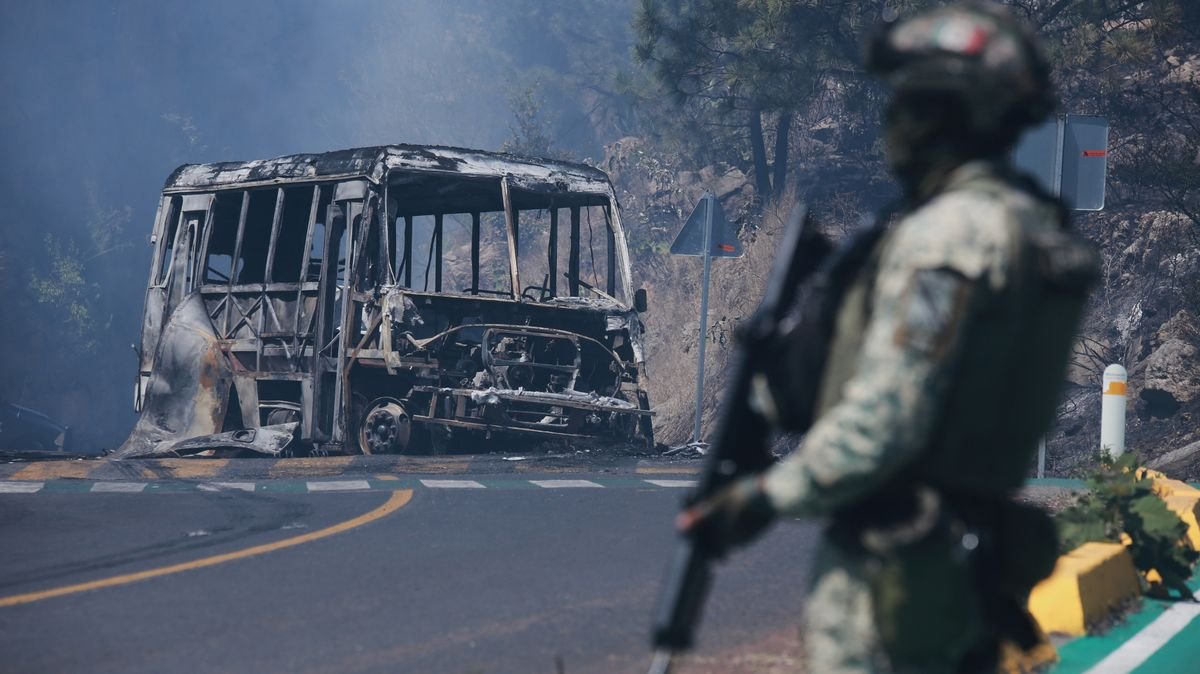
The CJNG revolutionized Mexico’s drug conflict by professionalizing and normalizing violence and fear. Despite El Mencho’s death, the aftermath led to a familiar cycle of chaos, with highways in multiple states blocked by burning vehicles as masked gunmen engaged in violent clashes with security forces before retreating to their familiar hideouts in the region.
British tourists in Mexico were cautioned to stay indoors and avoid non-essential travel following security incidents in Jalisco, including in Guadalajara and Puerto Vallarta, triggered by law enforcement actions against organized crime. The situation prompted airlines like Air Canada to suspend flights to the area, transforming holiday destinations into scenes of turmoil and roadblocks.
The arrest of El Mencho mirrors the capture of another infamous drug lord, “El Chapo” Guzmán, who escaped from prison in 2015 through a sophisticated tunnel. The pursuit of Guzmán through Mexico’s treacherous terrain highlighted the deep-rooted corruption and violence within the cartel ecosystem, showcasing the extraordinary measures taken by criminals to evade justice.
The legacy of El Mencho and El Chapo underscores the systemic issues driving drug cartels, including violence franchising, corruption exploitation, and global demand. While the deaths of these kingpins may create temporary disruptions, the underlying infrastructure supporting drug trafficking, such as hidden tunnels and narco submarines, remains intact, signaling a continuous struggle for Mexico against organized crime.
As Mexico grapples with the aftermath of El Mencho’s demise, the nation faces the challenge of filling the power vacuum left by these iconic figures, emphasizing the enduring resilience of criminal networks in adapting to law enforcement actions.