
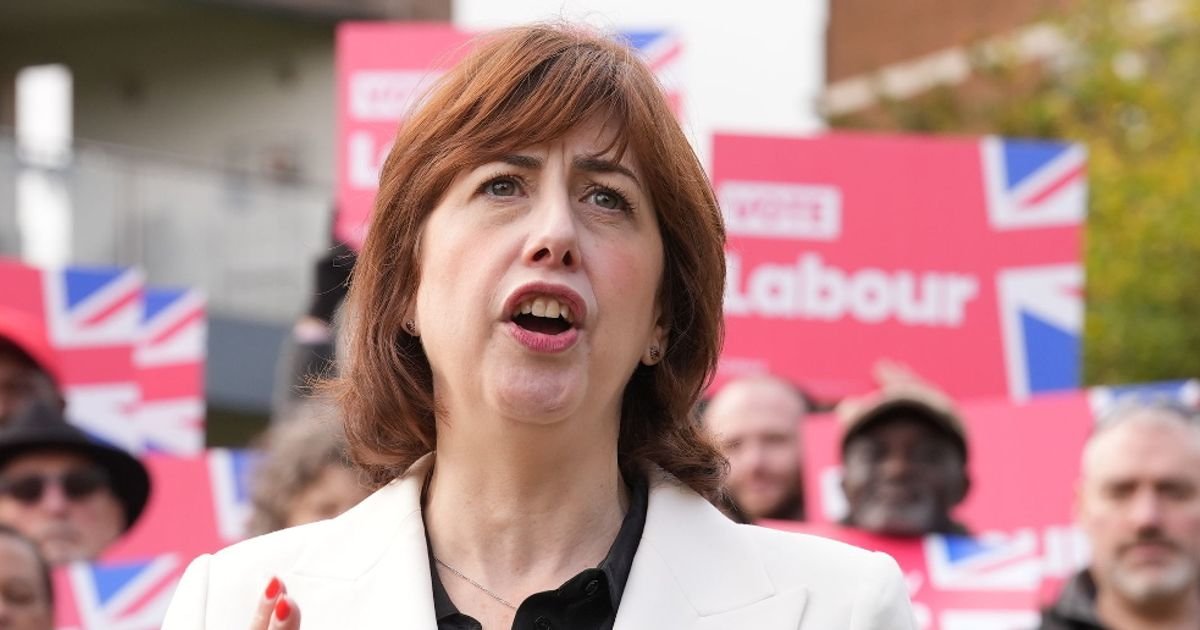

Labour Deputy Leader was not something I anticipated at the start of last year. It came as a surprise but a significant honor. Holding such a crucial role in the Labour Party during these challenging times is a heavy responsibility.
Members of the Labour Party voted for me for specific reasons. They seek a Deputy Leader who can enhance Labour’s performance, provide a clearer representation of our values, and demonstrate whose interests we prioritize. They emphasized the importance of unity within the team, rather than creating discord. I pledged to uphold both aspects.
The current landscape highlights the increasing struggles faced by ordinary individuals over the past decade. Merely having a job is no longer sufficient for a decent standard of living. Access to secure and affordable housing, particularly for the younger population, has become more distant. Rapid changes in the job market, coupled with global conflicts and migration issues, have direct impacts locally.
The public’s outcry for change echoes throughout the UK. They yearn for their voices to be heard by politicians who truly understand their concerns. The Labour Party must demonstrate that it aligns with these aspirations and is actively working to address them. Failure to do so may drive people towards entities offering empty promises and simplistic solutions. Implementing substantial changes that benefit ordinary citizens and reshape public services and the economy is a far more complex endeavor.
To effectively convey this narrative and exhibit that mainstream politics can drive tangible transformations, we must put in the necessary effort, focus on our goals, and engage with the public constructively, steering clear of internal conflicts and blame games.
For instance, the recent Budget distinctly reflected Labour’s principles. Measures such as uplifting half a million children out of poverty, primarily from working families, funded through a mansion tax, a gambling levy, and fairer taxes on asset incomes, underscore our commitment to social welfare. Additional initiatives included salary hikes for low-income earners, reduced energy costs, healthcare improvements, and expanded access to free school meals. A Labour government, led by Keir Starmer, strives to benefit the majority, not just a select few.
It can be frustrating when our message gets overshadowed. However, cutting through the noise and effectively communicating our vision becomes challenging when internal disputes are made public.
Looking ahead to early 2026, as significant Labour policies take effect – such as improved sick pay, wage increases for low-wage earners, enhanced rental conditions, public ownership of railways, increased social housing, higher state pension rates, family cost assistance, and the eradication of zero-hour contracts – it is imperative to champion these policies unwaveringly. Such opportunities may not present themselves again.
With crucial elections approaching across Britain next year, it is vital for all of us to support Keir Starmer to prevent the handing over of poorly managed councils or allowing opponents like Reform to gain a stronghold in Wales or Scotland. As the Labour Party, we owe it to the nation to unite, prioritize the country’s well-being, and combat divisive politics and hate. Unity within our ranks is essential to achieve this goal.