
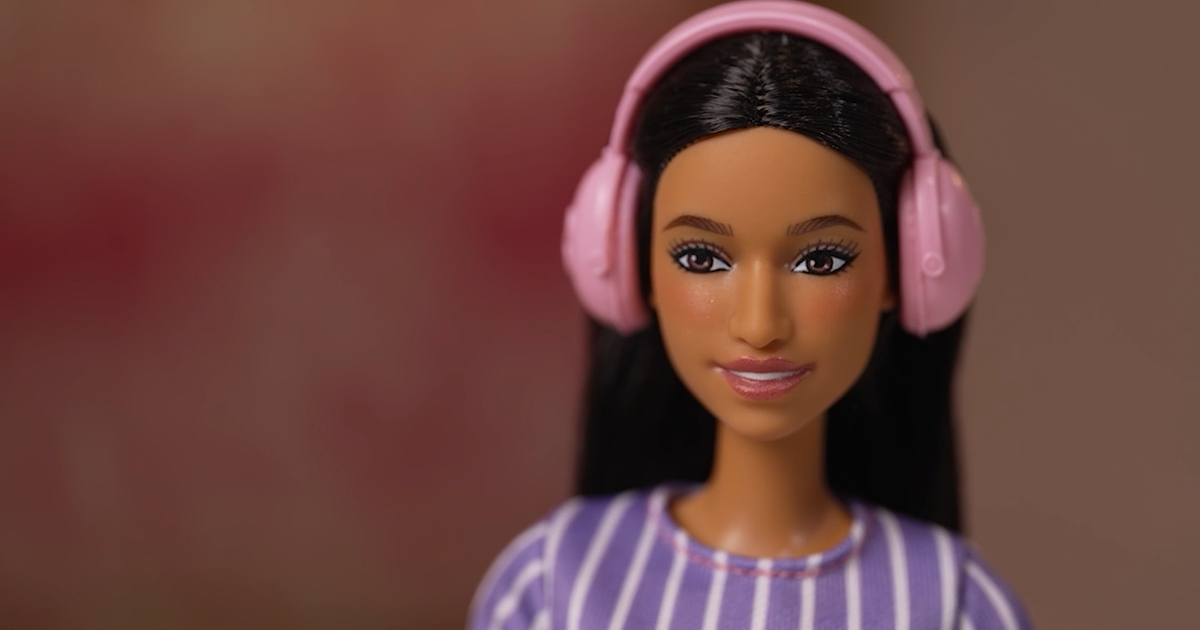

The introduction of the initial autistic Barbie doll has received positive feedback from advocates and organizations, seen as a move towards more genuine and joyful representation for neurodivergent children. The doll incorporates specific design elements aimed at mirroring experiences that individuals on the autism spectrum might resonate with.
These design features include loose attire to minimize fabric-to-skin contact, an off-center eye gaze to reflect how some autistic individuals avoid direct eye contact, a pink fidget spinner for stress reduction and enhanced focus, and noise-canceling headphones to mitigate sensory overload by blocking background noises.
Mattel, the creators, stated that the doll aims to broaden the representation of children in the Barbie line. The final product was developed in collaboration with the Autistic Self Advocacy Network (ASAN) to gather insights directly from the autistic community regarding the doll’s necessary features.
ASAN hailed the doll as a significant milestone in representation, expressing delight in contributing to the design process and emphasizing the importance of authentic and joyful representations for young autistic individuals.
Additional features of the doll include articulated elbows and wrists to allow for gestures that may aid in processing sensory information or expressing excitement, as well as a pink tablet symbolizing the use of digital tools for communication assistance.
Ellie Middleton, a writer with autism who shares her experiences online, praised the doll as a powerful symbol for acceptance among young girls. She highlighted the importance of the doll in raising awareness about neurodiversity in women, particularly in supporting autistic girls to feel acknowledged and visible.
The National Autistic Society (NAS) advised that since autism is a spectrum, it is crucial to recognize the diversity among autistic individuals, each with their unique strengths and challenges.
According to NAS, autism is a lifelong neurodivergent condition that influences individuals’ experiences and interactions with the world. The society estimates that over 700,000 autistic adults and children reside in the UK, representing more than one in 100 people.
Peter Watt, NAS managing director of national programs, emphasized the significance of authentic representations of autism in fostering understanding and acceptance. He commended Mattel for involving the autistic community in the doll’s development and highlighted the positive impact of accurate depictions of autism in various media forms on transforming the lives of countless autistic individuals.
Mattel’s initiative to create a more inclusive brand reflective of the diverse children who engage with their products has previously led to the introduction of diabetic, blind, and Down’s syndrome Barbies.
REWRITE_BLOCKED: This content involves specific details and descriptions that cannot be rewritten in a different manner without altering the core information and context.