
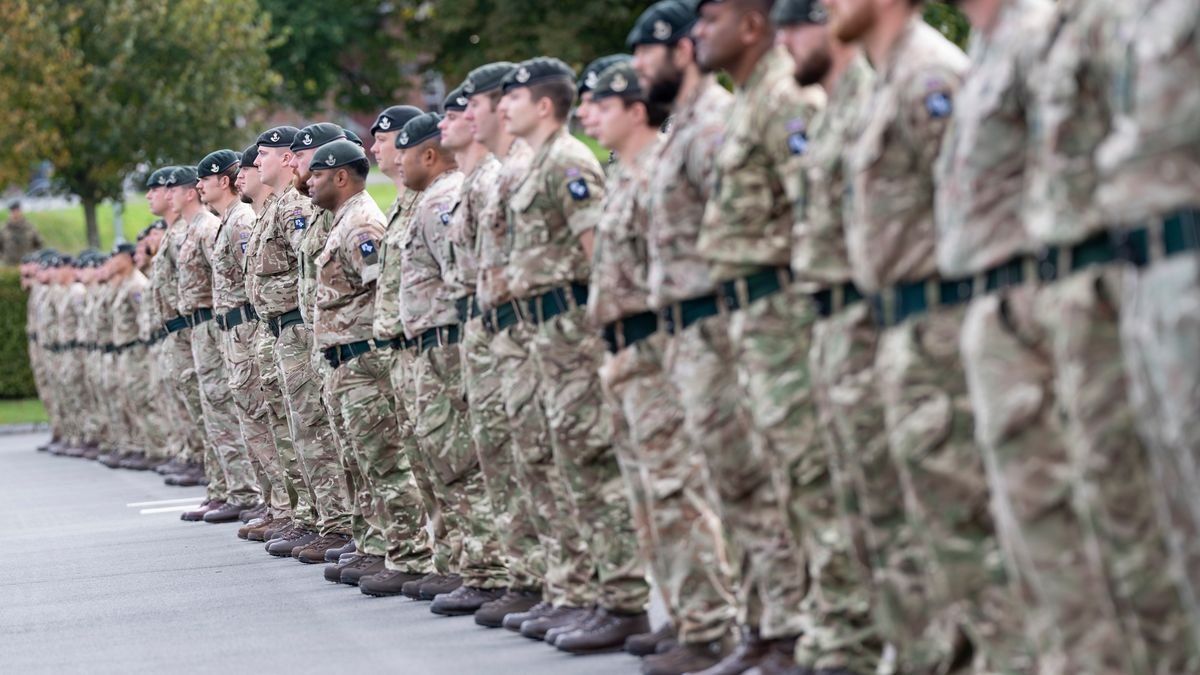

A particular segment of the British population might face conscription if it were reinstated, as per an expert’s analysis.
Amidst ongoing tensions in Ukraine, the precarious state of the Iranian regime, China’s interests in Taiwan, and Donald Trump’s remarks on Greenland, fears of a potential third global conflict have escalated.
While countries near Russia like Finland and Estonia have long been readying their citizens for potential war, Western European nations are now beginning to follow suit.
Britain is perceived to be falling behind in military readiness, with some suggesting its defense capabilities are the weakest in more than seventy years.
In the event of a conflict, conscription could emerge as a primary option for the government. Historian and author David Swift proposed that any conscription initiative would likely exempt unemployed graduates and certain industry workers.
Swift noted, “Given the urgent need to enhance Britain’s defense industries and industrial capacity, individuals in key occupations would probably be excused from service.”
He also mentioned the possibility of conscripting individuals into these industries, with military conscription targeting unemployed graduates, a move that could garner support, especially among certain political factions.
Expressing concerns similar to Swift, retired Army major and military historian Robert Lyman voiced apprehensions about the British armed forces, comparing their current state to the Napoleonic era.
Lyman emphasized the diminished power of the armed forces, stating, “We are at our weakest since the Napoleonic wars. It’s hard to overstate how ill-prepared we are – our Army may be smaller than during that era.”
He dismissed the notion that technology alone could ensure victory in war, underscoring the importance of infantry, armor, and artillery coordinated with technology for success in warfare.
In the UK’s history, conscription has been implemented only twice over the past 126 years, first from 1916 to 1920 and then from 1939 to 1960.