
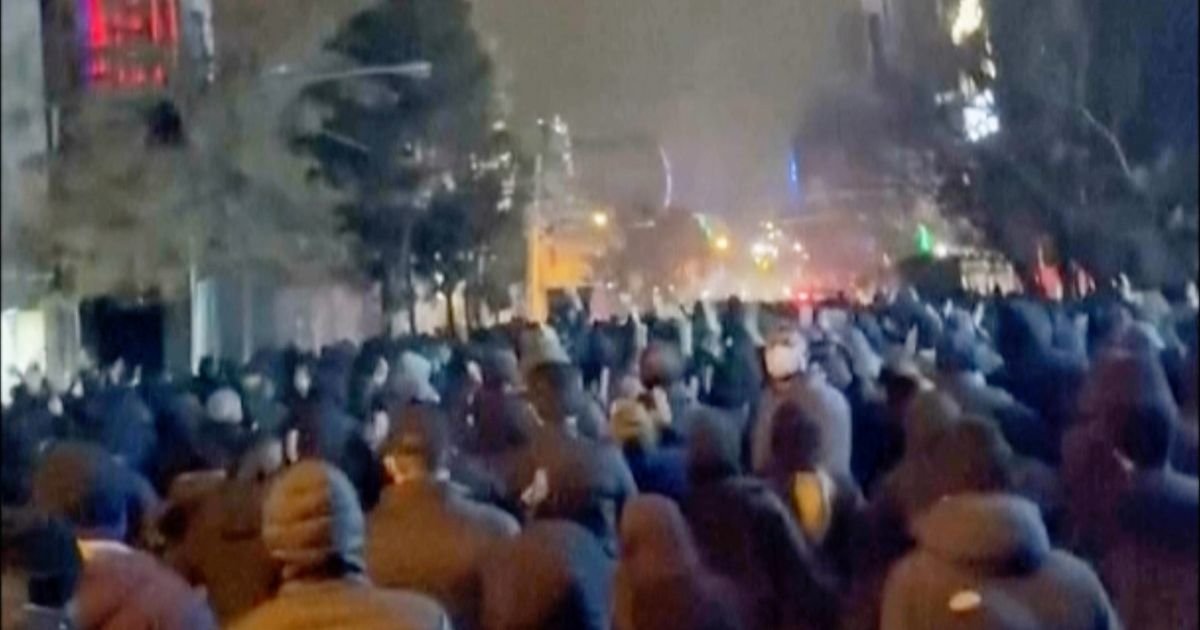

Shadowy Iranian operatives have brought in nearly 1,000 additional foreign troops to quash violent protests raging across Iran. The country, on edge, has issued threats towards the United States and Israel amid the ongoing turmoil.
Approximately 900 Iraqi militia members aligned with Iran have been mobilized to suppress the uprising, which has resulted in the deaths of hundreds of opposition demonstrators and over 100 security personnel. The unrest, escalating daily, claimed the life of 23-year-old student Robina Aminian, who was fatally shot in Tehran during the protests.
The reinforcement of troops signals the regime’s escalating concern, with sources confirming the recruitment of 20,000 opposition cells prior to the revolt. The influx of secretive Iraqi units, affiliated with various Shia militia groups and operating under Iraq’s Popular Mobilisation Forces, has intensified the government’s crackdown on dissent.
These militia forces discreetly entered Iran through multiple western border crossings and have been strategically deployed in volatile areas of northwest Iran under the command of Esmail Ghaani, the head of the Islamic Revolutionary Guards Corps’ Quds Force.
Amid chants of “death to Khamenei,” protesters have targeted Iran’s Supreme Leader, Ayatollah Ali Khamenei, reflecting the deep-seated unrest. The Iranian government, facing mounting pressure, has framed the protests as part of a broader conflict with Israel and the U.S., with threats directed at military bases in the region.
As tensions escalate, President Donald Trump has hinted at potential intervention if violence against protesters persists, warning of robust retaliation. Iranian leaders, grappling with the widespread dissent, are accused of orchestrating a crackdown on dissenters and dissenting security officials, with reports of numerous arrests in Kermanshah City.
The death toll continues to rise, with hundreds feared dead and thousands detained. The U.S. is considering various responses, including cyber-attacks and direct military action, prompting Iran to express a willingness to engage in negotiations to avert further escalation.
Despite reports of widespread casualties and arrests, an information blackout enforced by Iranian authorities has limited the flow of information from the country, fueling concerns about the true extent of the crisis.