
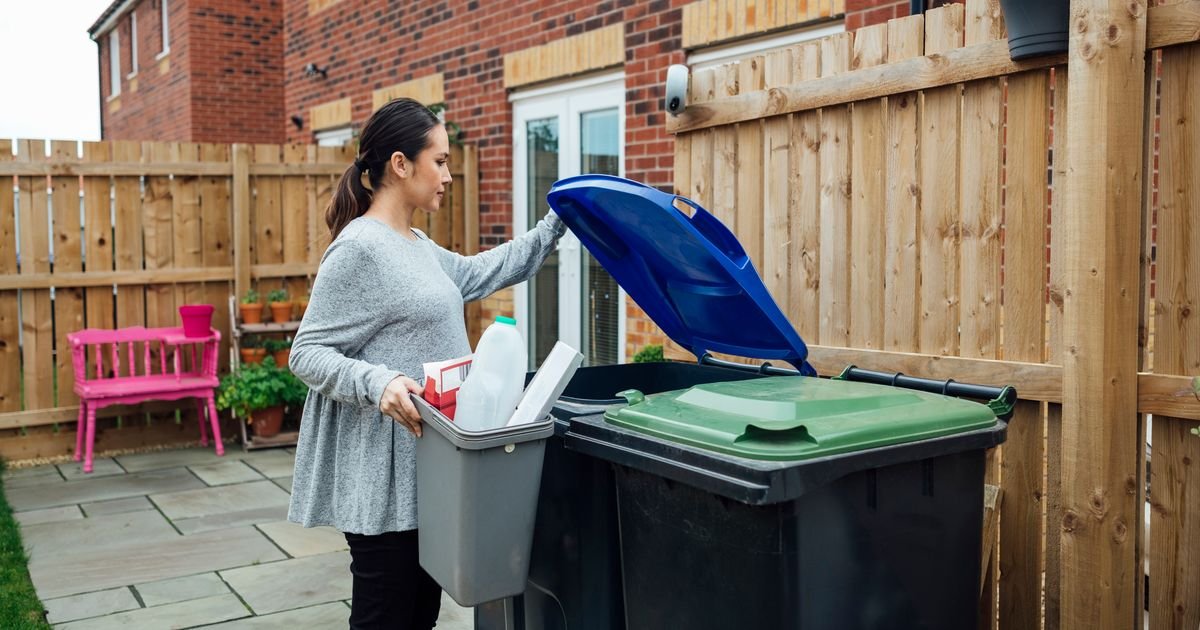

Household waste may appear innocuous, but disposing of incorrect items in your bin could lead to substantial fines or even suspension of waste collection services. Local councils are cautioning residents about improper and dangerous waste disposal practices, with several items being prohibited.
HAYPP, an online retailer, highlights that this issue extends beyond legality, as it can result in environmental harm, identity theft, fire risks, and serious safety concerns for waste management personnel. Authorities nationwide are clamping down on waste “contamination,” with many imposing penalties for repeated violations.
Recent data from WRAP’s Recycling Tracker reveals that contamination rates in UK households remain high, with approximately 81% of individuals unknowingly placing non-recyclable items in their recycling bins. Only nine percent of adults express confidence in knowing what is recyclable.
Government statistics indicate that the household recycling rate in England stood at a mere 44% in 2023, leaving over half of the waste unrecycled. Councils report rejecting thousands of tons of recyclable materials annually due to misplacement in bins.
Certain items should not be discarded with regular household waste. For instance, HAYPP’s Head of Legal and External Affairs, Markus Lindblad, advises against disposing of reusable vaping devices in household bins due to their lithium batteries, plastics, and chemical residues, which can pose safety risks. Such devices should be taken to certified electronic waste recycling centers for proper disposal.
Furthermore, the UK government’s Environment Agency emphasizes that lithium-ion batteries are fire hazards and should be recycled at designated drop-off locations, not in general bins. Similarly, used or expired EpiPens and injectables should not be thrown in household waste as they contain pressure and medication, necessitating proper disposal at pharmacies or medical waste facilities.
Sensitive documents like old bank statements and expired IDs should be shredded before disposal to prevent identity theft risks. Hazardous substances such as paints, solvents, and household chemicals must not be left in regular waste as they can contaminate soil and water if not handled through proper hazardous waste programs.
Garden soil is also prohibited from household waste bins as it can affect compost quality. Local authority guidelines stress the need to take soil to designated recycling points to preserve compost integrity.
To avoid penalties or legal action, residents are advised to consult local waste disposal guidelines and use appropriate channels for disposing of hazardous and sensitive items.