
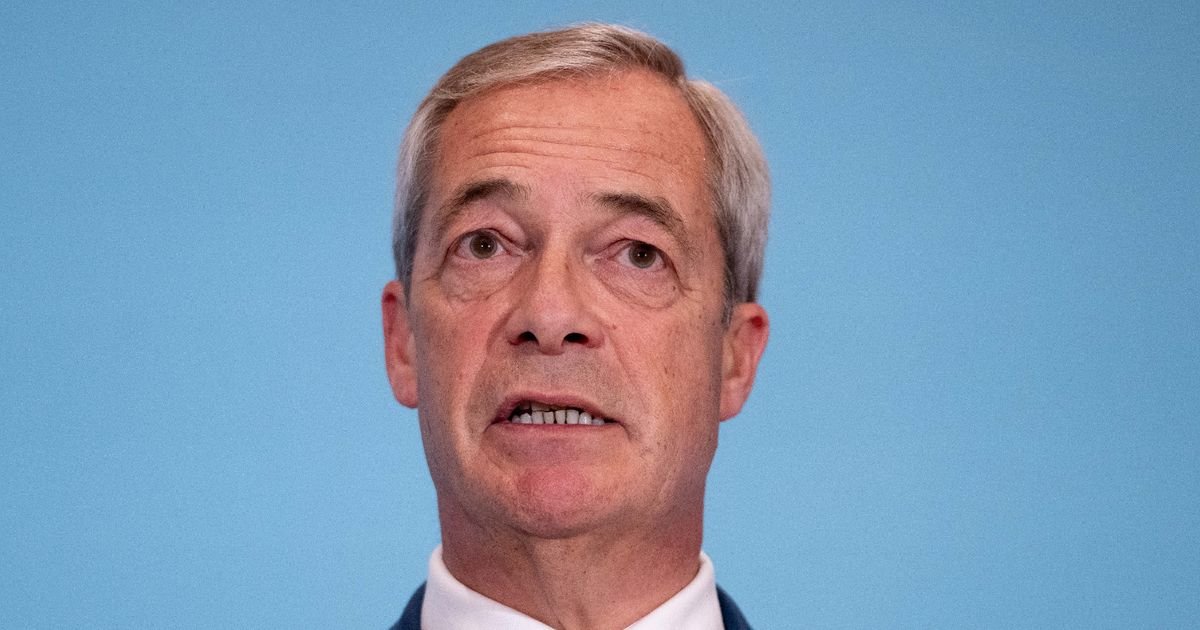

In the realm of British politics, a dynamic leader is causing a stir within a rising party that is gaining momentum in the polls. This new political force is knocking on the door of 10 Downing Street, positioning itself as an alternative to the traditional Labour and Conservative parties. This scenario echoes a similar situation in 1981 when the Social Democratic Party, led by Roy Jenkins and Shirley Williams, made bold claims of reshaping the political landscape, only to fade away seven years later.
Nigel Farage, known for his contentious demeanor, might be wary of history repeating itself as Reform UK faces an uncertain path to victory in a potential General Election not expected until 2029. The road ahead for this right-leaning veteran is fraught with challenges and uncertainties, reminiscent of the turbulent times faced by former Prime Minister Harold Wilson.
Recent polling data reveals that Reform UK’s support has dwindled to 25%, holding a narrow lead over the Conservatives at 22%, while the Green Party under Zack Polanski has seen a surge to 19%. Labour, led by Keir Starmer, lags behind at 18%, and the Liberal Democrats under Ed Davey stand at 10%. These numbers, coupled with the possibility of anti-Farage strategic voting, could impede Farage’s ambitions of reaching 10 Downing Street, unless strategic alliances are forged, as suggested by Tory chair Kevin Hollinrake.
Despite its current lead, Reform UK is not dominating the national landscape, facing challenges ranging from internal scandals to criticisms of its representatives’ conduct. The party’s vulnerability is exposed under public scrutiny, highlighting the pitfalls of populist movements in the modern political arena.
While Reform UK shows promise in upcoming Welsh, Scottish, and English elections, there is a sense of disillusionment setting in, hinting at a potential decline in its influence. While completely dismissing Farage would be premature, the likelihood of him becoming Prime Minister seems remote, as public sentiment shifts away from his divisive rhetoric.
In this era of heightened awareness and accountability, the true colors of political figures come to light, posing a threat to those who rely on superficial patriotism. The journey ahead for Reform UK remains uncertain, with challenges and obstacles testing its resilience in the face of evolving political landscapes.