
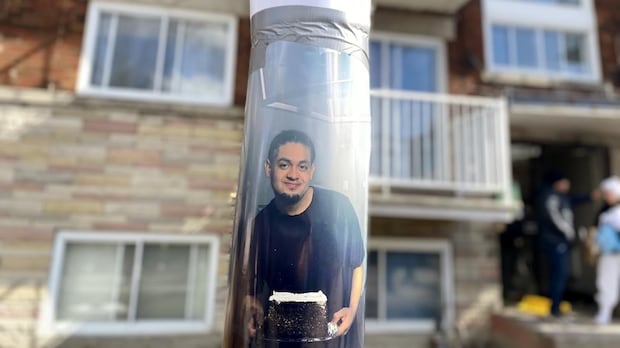

A coroner’s investigation has determined that the death of a 29-year-old man after an encounter with police was accidental, although the method of restraint employed by officers is likely to have played a significant role.
Abisay Cruz passed away on March 30, 2025, during an incident that started on the rear balcony of an apartment in the Saint-Michel area of the city.
He was one of two individuals who died after separate police operations in Montreal within a span of 12 hours over that weekend. His death, alongside videos of the incident that circulated on social media, ignited protests in the area and intensified public mistrust towards law enforcement.
The “hogtie technique,” which was utilized by police in this situation, involves binding an individual’s limbs behind their back while they are lying face down.
Coroner Géhane Kamel concluded that Cruz’s death was due to “cocaine intoxication and likely positional asphyxia during a police intervention.”
Kamel commented on the hogtie technique, stating: “This method of restraint is widely discouraged and is either restricted or banned by numerous police departments and medical organizations due to its association with fatalities in custody and serious safety concerns.”
She further noted that it was “very likely” that the restraint method contributed to the fatal outcome.
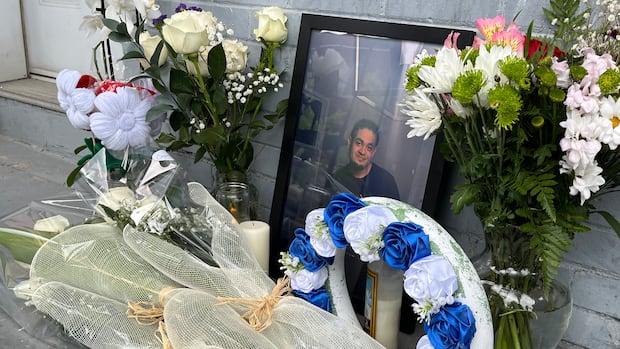
A coroner’s report has determined that the death of 29-year-old Abisay Cruz following a police altercation was accidental, but the hogtie technique used by officers was a ‘highly likely’ contributing factor.
5 police officers involved in altercation
In her report, Kamel noted that Cruz was the second youngest among five siblings, remembered by family and friends as a caring individual with strong familial ties.
Leading up to his death, Cruz was facing deportation back to Honduras, a situation that likely added significant stress, according to the coroner’s findings.
On the day he died, a 911 call reported a man, later confirmed to be Cruz, who seemed to be in crisis near Pie-IX Boulevard and 47th Street.
Kamel highlighted that the police’s account indicated Cruz posed an “immediate physical threat.”
However, other eyewitnesses described a different scene, with one stating that Cruz was sitting with his hands raised and appeared willing to engage with the officers before the situation escalated.
Despite this, Kamel stated it was plausible to think there was an immediate risk to both Cruz and the residents of the apartment. Five police officers were involved in subduing Cruz.
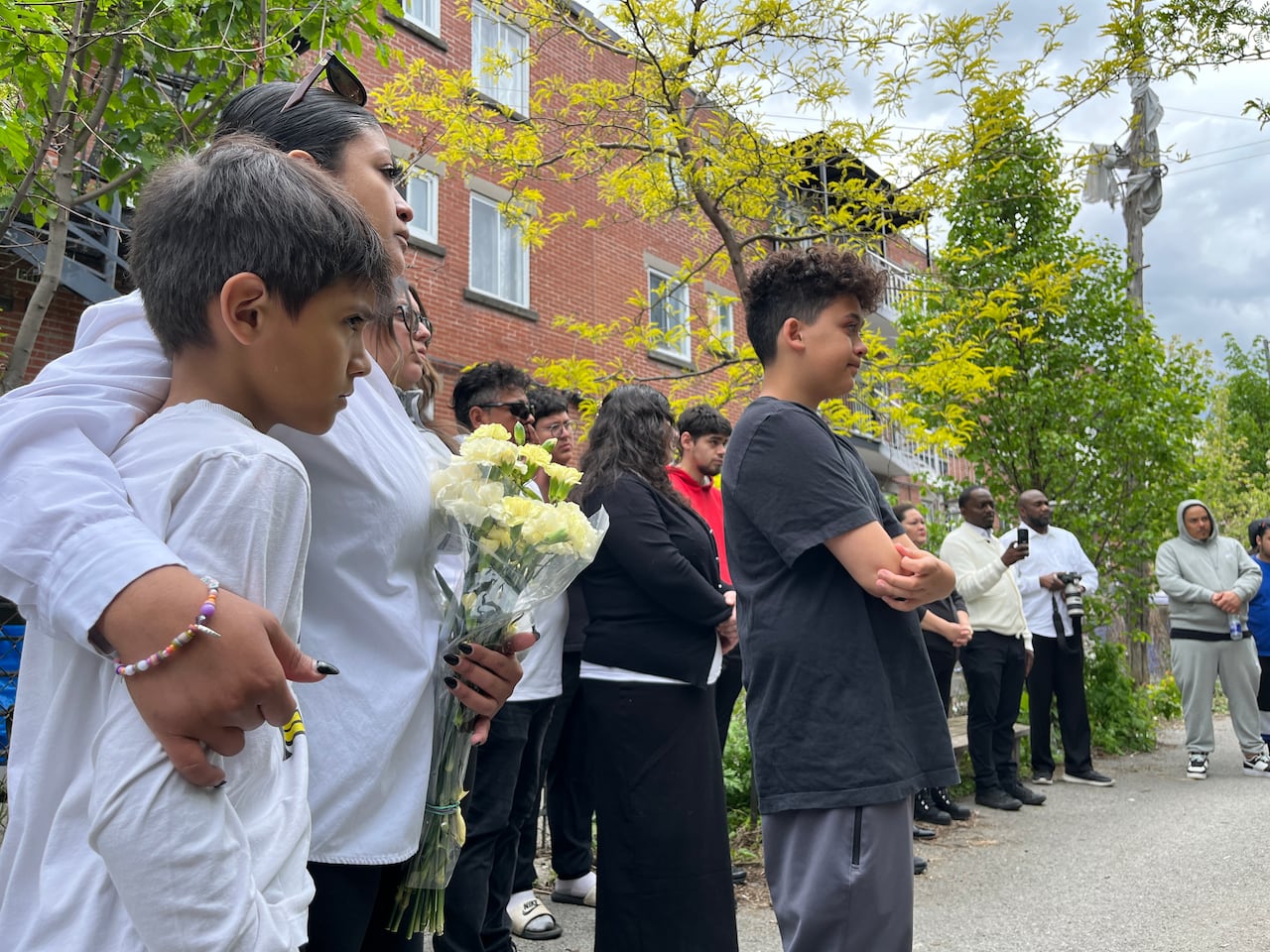
Friends and family of Abisay Cruz at a vigil following his death. (Paula Dayan-Perez/CBC)
Coroner advises banning technique
The province’s independent police oversight body, known as the BEI, conducted an investigation into Cruz’s death, and the prosecution service determined in March 2026 that the officers would not face any criminal charges.
However, Kamel raised concerns regarding the police response. She noted that Cruz was held face down for over two minutes before being rolled onto his side.
The coroner also pointed out a lack of direction from the supervising police sergeant at the scene, who did not intervene or provide corrective instructions as Cruz’s condition worsened.
In her report, Kamel urged the Service de police de la Ville de Montréal (SPVM) to officially prohibit the hogtie technique and recommended that officers be supplied with naloxone kits and equipped with body-worn cameras when responding to individuals in crisis or situations requiring force.
Police to study recommendations
Montreal police released a statement expressing their commitment to addressing the recommendations made.
The hogtie technique is not part of the training curriculum at the province’s police academy, École nationale de police du Québec, nor is it taught by the police service itself, according to police.
“Our officers are trained to recognize signs of medical emergencies, especially in cases of intoxication, and the importance of providing prompt medical assistance once the individual is subdued,” the statement noted.
Alain Babineau, a former RCMP staff sergeant now involved with The Red Coalition, a Montreal-based advocacy organization, described the coroner’s findings as “very concerning.”
“It raises questions about who is responsible for policy-making at the SPVM,” he remarked, emphasizing that the controversial technique has been part of training for many years.
“If it hasn’t been taught in two decades, clearly someone is still teaching it in some form, somewhere.”
The report also criticized the performance of Urgences-santé. Kamel indicated that Urgences-santé was experiencing ongoing staffing shortages, noting that on the day of Cruz’s death, there was only one advanced paramedic team available for the entirety of Montreal.