
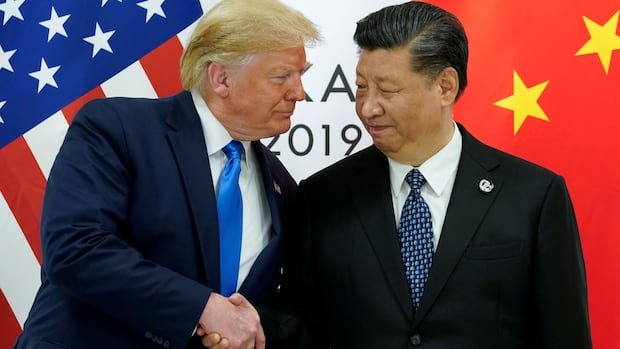

U.S. President Donald Trump warmly welcomed Chinese President Xi Jinping this week, praising him as a “great leader” and discussing the potential expansion or renewal of a trade agreement between the two nations to mitigate tariffs and establish a trade ceasefire. Trump has lauded the trade deals made with Beijing, including expressing openness to Chinese automakers setting up factories in the U.S.
In contrast, Trump and his administration have criticized Prime Minister Mark Carney for a smaller trade deal with China, which involved a reduced tariff rate for Chinese electric vehicles entering Canada. U.S. officials, such as Transportation Secretary Sean Duffy and Commerce Secretary Howard Lutnick, have voiced disapproval of Canada’s trade decisions with China.
Jia Wang, a senior fellow at the China Institute at the University of Alberta, highlighted the perceived hypocrisy in the U.S.’s trade demands versus its actions. Despite Canada’s increasing trade with China in response to U.S. tariffs, the U.S. still imports significantly more from China compared to Canada.
Senator Rick Scott emphasized the risks he sees in Canada expanding trade with China over the U.S., cautioning against the potential consequences. However, experts like Mark Manger from the University of Toronto’s Munk School of Global Affairs & Public Policy noted the inconsistency in U.S. policies that engage with China while discouraging allies like Canada from similar ventures.
As tensions between the U.S. and China persist, experts stress the importance for Canada to navigate its relationships with both countries strategically. They advise that Canada should focus on long-term planning and leadership to effectively engage with the world’s top economies.