
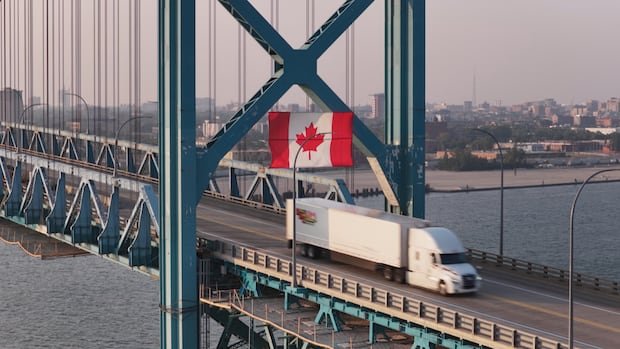

In recent months, amid uncertainty surrounding the long-awaited opening of the Gordie Howe International Bridge, trucking companies have reported that representatives from the privately-owned Ambassador Bridge in Detroit have been actively reaching out to them in an effort to retain their business. Lak Shoan, the director of policy for the Ontario Trucking Association, mentioned that they were informed about these efforts by a few of their members during the spring.
When contacted by CBC Windsor, Canadian trucking companies with cross-border operations either refrained from discussing potential toll rate offers from the Ambassador Bridge or did not respond at all. However, a now-deleted post from a U.S. trucking union official in late July instructed members not to use the new publicly-owned crossing due to a contract with the Ambassador Bridge resulting in significant toll savings.
Toll rates and revenue played a significant role in the protracted political battle to open the Gordie Howe bridge, entirely funded by the Canadian government. The agreement for the bridge’s opening includes a provision allowing the U.S. government to prevent the new bridge from reducing tolls below a certain threshold compared to other regional crossings.
The influential Moroun family, owners of the Ambassador Bridge since 1979, increased their political activities leading up to former U.S. President Donald Trump’s threats to delay the opening of the new crossing. Despite the eventual opening of the Gordie Howe bridge on July 27, it came after a previous planned opening in June was canceled at the U.S. government’s request.
Allegations have been made that Trump sought to block the new bridge’s opening to benefit the Morouns. Meanwhile, the Ambassador Bridge representatives did not provide comments before the article’s publication time.
The trucking association expressed support for healthy competition between the bridges, potentially leading to decreased toll costs for trucking companies. Details revealed by JT Barrett, chair of UAW Local 212, shed light on the financial arrangements between FCA Transport and the Ambassador Bridge, with significant cost differences before and after their current contract.
Stellantis, the parent company of FCA Transport, declined to confirm the exclusive toll contract status of their drivers with the Ambassador Bridge. The company stated its anticipation of leveraging the new crossing to streamline its operations between the U.S. and Canada to support just-in-time manufacturing processes.
The ongoing uncertainty surrounding the opening of the Gordie Howe bridge likely made any offers from the Ambassador Bridge attractive to trucking companies seeking stability in the midst of economic fluctuations.