
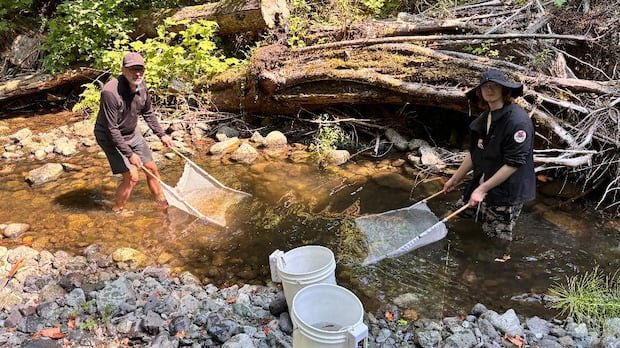

Parts of British Columbia are experiencing severe drought conditions this summer, leading to water restrictions in Bessette Creek and temporary protection orders for the Salmon River watershed. The Cowichan Lake Salmonid Enhancement Society is actively involved in mitigating the impact by conducting fry salvage operations to relocate fish from drying rivers to more sustainable waterways. Bob Crandall, treasurer of the society, emphasizes the importance of human intervention in addressing the ecological challenges caused by drought.
Collaborating with the Ts’uubaa-asatx Nation and volunteers, Crandall and his team work tirelessly to rescue and transport various fish species to safer environments. However, the changing climate has made this task increasingly difficult, with streams drying up farther upstream than before. The process involves using aerators and nets to ensure the fish’s well-being during relocation, a physically demanding task in hot weather conditions.
The Ts’uubaa-asatx Nation plays a crucial role in the fry salvage efforts, utilizing drones to identify drying streams and actively participating in the relocation process. Michelle Corfield, a key figure in the Nation, stresses the cultural and ecological significance of salmon, highlighting the community’s commitment to preserving these keystone species for future generations through comprehensive conservation initiatives.
While similar rescue efforts are underway in other regions affected by drought, such as France, the escalating challenges posed by extreme heat and water scarcity are pushing the limits of current conservation practices. Jean-Pierre Faure from the Fédération de Pêche du Rhône emphasizes the urgent need for ecosystem restoration and adaptive water management strategies to address the long-term impacts of climate change on fish populations.
Faure warns that relying solely on short-term interventions like fish relocation may not be sustainable in the face of increasingly severe weather events. The physiological stress on fish due to high water temperatures and limited resources could lead to significant mortality rates, underscoring the importance of holistic approaches to habitat conservation and river restoration. As the global climate crisis intensifies, proactive measures to safeguard aquatic ecosystems are becoming imperative to ensure the survival of vulnerable fish species in the wake of environmental challenges.